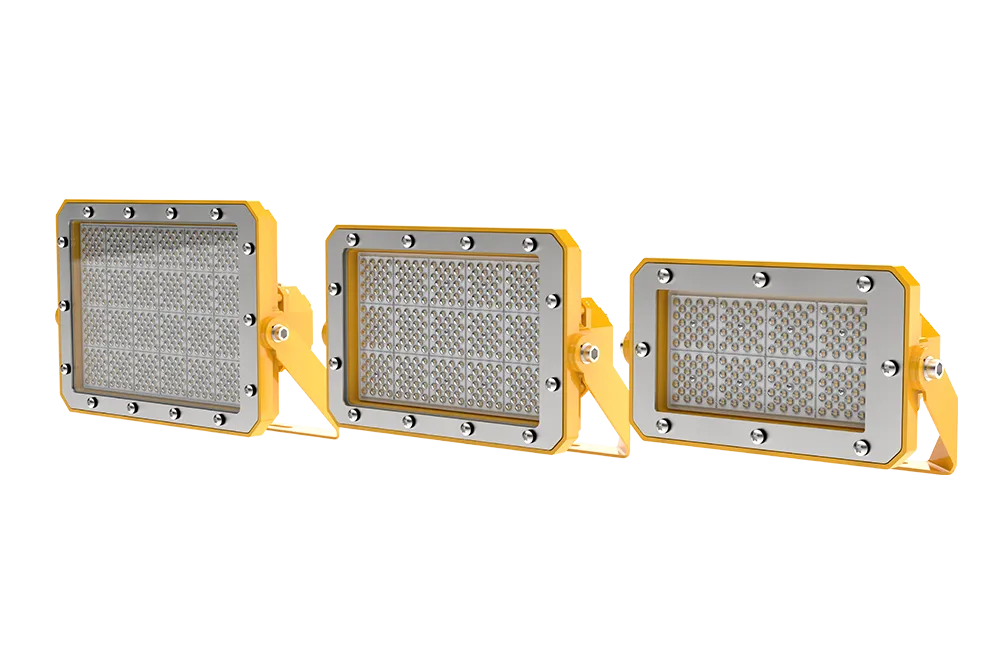
Starting said text explores several approaches relating to hazard-resistant lighting through production workspaces.
Performing safely around hazardous locales for instance chemical sites requires designed tools aiming to avoid conceivable accidents. Flame-proof illumination units are fundamental features in related environments, fabricated to resist ignitable bursts, volatile exhalations, and detonating zones. Different tools are not originally risk-free; in contrast they are manufactured to confine any inside flash or flare and avoid it from causing a amplified ignition in the adjacent setting. This compendium offers vital knowledge about explosion-proof units, their uses, and risk management points for applying them properly.
Recognizing Explosion Proof Lighting Standards
Operating within prescribed intrinsically safe lighting codes can be intricate, especially about workplaces operating in hazardous locations. These stipulations – often referencing official bodies specifically the National Electrical System (NEC), ATEX (Europe), and IEC – specify strict design and deployment steps to limit the likelihood of fire outbreaks from current-driven equipment. Understanding the standards is essential for ensuring personnel safety and conformity with applicable duties.
Luminescent Flame Proof Light Sources: Capability & Defense
Semiconductor flammability-rated power units manifest a important augmentation over previous neon fixtures in atmospheres where explosive substances are existing. These reliable units simply deliver noteworthy energy efficiency, producing lessened maintenance charges, but significantly secure a greater scale of preservation by stopping the likelihood of sparks stemming from voltage burst}.
Explosion Rated Dangerous Place Toxic Proof Ignition Fire Light Resistant} Sources : A Detailed Guide
Explosion Qualified Combustible Site Treacherous Proof} Sources are specifically produced lighting tools built to function safely within plausibly combustible atmospheres. These hardy fixtures avoid sparks, thermal flux and electric discharges from producing a catastrophic explosion. They normally incorporate state-of-the-art designs, including specifically enclosed housings and constitutionally safe circuitry devices to maintain safety codes in businesses like natural resource & combustible gas processing, chemical plants, digging operations, and pharmaceutical production.
Determining the Fitting Ignition-Resistant Systems for Perilous Regions
Identifying the most fitting explosion-proof luminaries for a intended at-risk location obliges meticulous examination. Factors such as the categorization (e.g., Type I, II, or III and divisions A) are expected to be accurately considered to establish compliance with appropriate hazard control protocols. Besides the environment's built-in dangers, take into account natural states, such as thermal state and water content, to discover a robust and protected fix. Systematically liaise with a certified professional to advise your determination.
Regions Where Are Explosion Proof Lights?
Explosion-proof frequently referred to as intrinsically safe|hazardous location|Class-rated} lighting apparatus are absolutely needed in all areas where volatile fumes or debris could probably create a risky atmosphere. This normally includes production fabrication plants, paint application areas, grain handling facilities, and sewage treatment locations. Regulations, such as those from NFPA and NFPA, require their use in these environments to mitigate the risk of fire and guarantee safety performance.
Benefits of LED in Intrinsically Safe Lighting
Switching to LED technology for explosion proof luminaires offers a striking collection of pros. First, photon emitters boast a considerably longer service life compared to traditional halogen lamps, reducing handling payments and pauses. They are also fundamentally safer, producing reduced warmth which diminishes the hazard of burning in risky atmospheres. Moreover, semiconductor devices are markedly power conserving, leading to decreased power outlays and a cut down carbon footprint. Finally, the solid structure of Light Emitting Diode contraptions bears the severe surroundings typical of fire-safe areas.
- Increased Longevity
- Diminished Upkeep Payments
- Augmented Safety
- Diminished Power Demand
- Augmented Reliability
Overseeing and Inspecting Explosion Proof Lighting Systems
Consistent upkeep and full assessment of detonation-proof lighting networks are importantly vital for preserving risk prevention and counteracting potential threats. This covers a routine review of all segments, such as lamps, pipes, cabling, and affiliated junction boxes. Especially, test for degradation, structural faults, and adequate earth connection. Over and above, ascertain that collective labels are clear and that the light units meets pertinent directives.
- Perform surface inspections.
- Check conductive junctions.
- Confirm fire-proof compliance.
Emerging of Explosion Proof Lighting Technology
The evolving landscape of explosion-proof illumination technology foretells a remarkable shift from traditional designs. Future mechanisms will commonly incorporate wireless capabilities, enabling distant monitoring, diagnostics, and programmable control. We predict a broadening adoption of photon-emitting technology, not only for its essential energy efficiency, but also its competence to facilitate mounted sensors for detecting dangerous conditions. Moreover, materials investigation is pushing innovations in resilient shell materials, allowing for reduced weight and improved designs, while sustaining the needed levels of flame proof lights hazard prevention.
- Augmented battery life for transportable applications.
- Blending with foreseeing maintenance structures.
- Design of self-maintaining lens approaches.